September 27, 2010

Black worm incident | Huckleberries | Lentil stew

We had kind of an icky food experience this weekend involving a food that's a staple at our house — dried shiitake mushrooms. My husband made a hot pot with lots of vegetables, shiitakes, and dashi made from soaking the dried mushrooms. As I was eating mine, I fished out a unidentified black thing and asked my husband (now referred to as NG for "needs glasses") what he thought it was. He thought it was a piece of mushroom. I didn't think so but started eating again, when another black thing appeared.

I took a closer look and saw teeny tiny legs at the front end. Gag. Then I noticed that some of the mushrooms looked like Swiss cheese, as in full of holes. And some of the holes had black dots. I squeezed such a mushroom, and another little black worm came out. I went to the pot and found lots more mushrooms with black dots. NG is a fast eater and had already finished his soup; he looked kind of sorry. I found the black worm incident disturbing and got rid of the rest of the package of mushrooms. Now I'm sorry I didn't soak them to see if the worms were alive in the dried mushrooms, or already dead, having been dried with the shiitakes before packaging.

The dried shiitakes looked perfectly normal. Neither the tops or the gills showed any sign of insect invasion; it was only after they were soaked that the holes and worms appeared. Has this ever happened to you? Does anyone know anything about this? I was just about to start cooking recipes from a newly acquired Japanese cookbook, and now my heart's not really in it. I'm not sure I can bring myself to use dried mushrooms! When I tried to find information about this online, I actually found a Web store selling mushrooms with or without worms! Can someone please explain this to me?

Miss E spent the weekend with us (her photo appears at the top of the post instead of the worms — she's so much cuter) and we made fruit salad together. It's been a long time since I've worked with 2-1/2-year-olds, and I misjudged the brilliant Miss E's knife skills. She was asked to cut a banana with a butter knife, and instead of using the knife, she smooshed up the pieces with her fingers. "That looks really appetizing," commented my son sarcastically as he walked into the kitchen. The rest of her job was to put the fruit that she and I cut into the serving dish, but she wished to take a bite out of each piece before putting it into the bowl. I convinced her to just eat the whole piece if she wanted some.

Notice the little blue berries in the bowl? (This is not the bowl with the mushed bananas!) They are huckleberries, and I read about them on Carbzilla's entertaining blog. She told me where to get some (at the farmers market) and we tried our first huckleberries. They look like tiny blueberries but have a much more intense flavor — delicious! Miss E loved them, especially in the huckleberry pancakes she had for breakfast.

I made a lentil stew for dinner with carrots, potatoes, corn and spinach. It was rich with smoked Spanish paprika, tomato paste, turmeric and other spices. (It also had dulse, but don't tell NG.) I topped it with fresh tomatoes and avocado, and served it over brown basmati rice. The end of summer tomatoes added a bright highlight to the delicious fall flavors of this warming stew.

Approximate directions for lentil stew
  • 3 large carrots, peeled and cut into 1 " chunks
  • 3 potatoes, cubed
  • 1 cup green lentils, washed
  • 2 medium onions, cubed
  • 2 teaspoons smoked Spanish paprika
  • 1/2 teaspoon granulated garlic
  • 3 tablespoons tomato paste
  • 1 teaspoon turmeric
  • 6 cups water
  • 1/2 cup chopped frozen spinach (or 1 bunch fresh)
  • 1 cup frozen corn
  • 1/2 cup packed chopped parsley
  • 1 to 2 tablespoons fruity vinegar (or lemon juice)
  • a few pieces dried dulse (not flakes) as desired
  • avocado and fresh tomato for topping
  1. Put the carrots, potatoes, lentils, onions, paprika, turmeric, garlic and tomato paste and water into a large pot. Bring to a boil, turn heat to simmer, cover and cook until vegetables are tender (about 30 to 45 minutes). 
  2. Add spinach, corn, parsley, and vinegar. Break apart the dulse pieces and add. Simmer a minute or two until the veggies are cooked. 
  3. Taste for seasonings, and add salt and pepper as needed. 
  4. Place into bowls with rice, and top with avocado and chopped tomatoes.

September 22, 2010

Indian dinner | Kasha varniskes | Bye bye summer | Spam

Samosas, Basmati rice, and whole wheat roti
Last night we attended the monthly dinner sponsored by Vegetarians of Washington. Each month a vegetarian dinner is catered by a different Seattle area restaurant. The dinners are always vegan, but the diners are a very diverse group that includes eaters of all ages, occupations and dietary persuasions. Last night we had a great time with a particularly congenial group of people, and we all enjoyed an Indian meal presented by Pabla Indian Cuisine, with restaurants in Renton and Issaquah.

Kabli Channa (Punjabi style garbanzo beans)
Mixed vegetable curry
Aloo gobi (spiced potatoes and cauliflow
In addition to the foods pictured above, we also had rice pudding for dessert, and received Nature's Path Peanut Choco chewy granola bars as an extra treat.

..........................................................................................

Kasha and bow-ties

 In my last post I displayed a photo of kasha and bowties (kasha varnishkes) made with shiitake dashi, shiitake mushrooms* and miso, promising a recipe. I'm posting a recipe with less exotic ingredients, instead, and a note on using shiitakes. For one thing, I'm out of dried shiitakes and need to make a trip to our favorite Asian market to restock our supplies. Instead of trekking down to the International District, my husband headed to the closest supermarket to purchase fresh mushrooms and raw, hulled buckwheat groats.*

As I have written in an earlier post, "traditionally, in Russia, kasha means porridge and can be made from any whole grain or combination of grains. To me, it means buckwheat groats, and kasha varnishkes is buckwheat and noodles, specifically bowtie noodles. Kasha varnishkes is a traditional comfort food brought to America by Russian Jewish immigrants.

Buckwheat is actually the seed of a fruit, not a grain. (You can read all about buckwheat and its possible appropriateness in gluten-free diets here.) It is very nutritious, delicious and quick cooking. Hulled, raw buckwheat is called buckwheat groats, and that's what I'm starting with in this recipe. After it's toasted it's called kasha."

Kasha and bow-ties
  • 8 to 10 ounce package bow-tie pasta (or other small pasta or flat noodle)
  • 1 cup raw, hulled buckwheat groats*
  • 2 tablespoons oil
  • 1 onion, finely chopped (about 1 to 1-1/4 cups)
  • 4 ounces fresh mushrooms, sliced (about 8 or 9 mushrooms or 2 heaping cups)
  • 1 clove garlic, minced
  • 1-1/2 cups hot water
  • 1/4 cup warm water
  • 2 teaspoon tamari (or soy sauce)
  • 1/2 teaspoon brown rice vinegar
  • 1 teaspoon evaporated cane juice (natural sugar)
  • heaping 1/2 cup minced parsley
  1. Cook the pasta, drain, (toss with 1 teaspoon of oil if desired) and set aside.
  2. In a large, heavy, dry pan such as cast iron, toast the buckwheat until fragrant (about 4 to 5 minutes) stirring continually.
  3. Add the oil to the pan then add the onions and mushrooms. Cook and stir until the onions begin to soften (about 5 minutes).
  4. Stir in the garlic and a pinch of salt (less then 1/8 teaspoon). Cook and stir for about a minute.
  5. Add the 1-1/2 cups of hot water to the pan slowly. Bring to a boil, turn the heat to simmer, and cover the pan. Cook until the buckwheat is tender and dry. (about 12 to 15 minutes)
  6. Meanwhile, add the tamari to the warm water. Add the sugar and vinegar and stir to dissolve sugar.
  7. When the buckwheat is tender, mix in the noodles. Stir in the tamari mixture.
  8. Stir in the parsley, reserving some for a garnish. Grind black pepper over the kasha. Taste for salt and add more if necessary. Serves 4 to 6.
*If you can only find toasted buckwheat groats, you can skip the pan toasting and start cooking the kasha at step 3. Warm the oil in the pan, then add the onion, mushrooms and toasted buckwheat to the pan together.

*You can also make this with dried shiitake mushrooms and mushroom broth. Soak 8 to 10 dried mushrooms in 2 cups of warm (not hot) water in a bowl for at least an hour, or until soft. Squeeze out the mushrooms into the bowl, remove the stems and slice the mushrooms. Add enough water to the broth, if necessary, to make 1-1/2 cups. Make the recipe using the shiitakes and broth instead of the fresh mushrooms and water.

..........................................................................................

Bye bye, summer

Spider web-draped still-green tomatoes and a lone pepper from our tabletop garden.
With fall officially here, there's no choice but to bid summer a sad goodbye. I'm not one of those people who can't wait for the cool, damp, RAINY days of fall. (Oh wait, wasn't "cool, rainy" supposed to be a description of winter? Or was that spring? Or maybe even a good part of this past summer, here in the PNW?) Cool-rainy is not my favorite type of weather (and thank heavens I spent the summer in the blazing Midwest where I soaked up heat like a sponge) so I hate to see summer — even a less-than-perfect summer — end. I like soup, and and other cold-weather foods like kasha, as much as anyone, but I like sunshine more. Come back, sun come back. Sigh.

I photographed some of the "end of summer" herbs and veggies growing at our house and around the neighborhood. You can see a lone Asian pear in our tree. When we went out to gather the fruit the other day, there was another couple happily picking them all. We asked if they could leave a few for us since it was our tree (we're living in the house and paying rent!) and they informed us the house's owner said they could pick the pears. They carted off all the reachable fruit, and that was that. We're not very argumentative and don't like to cause trouble with the neighbors, so we let it go. But we were a little sad.

Fennel drying in a neighbor's garden

September 19, 2010

Blueberry-lime muffins | Kasha and bowties

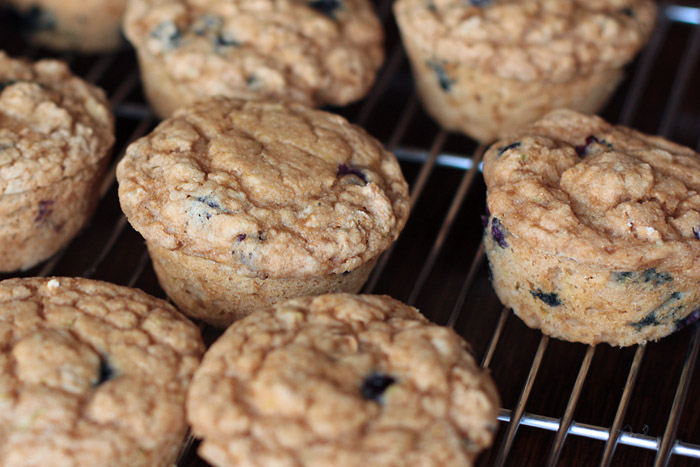
Whenever our little granddaughter comes to our house she always asks if she can have a muffin. I gave her a muffin once when she was barely a toddler, and she never forgot it. Miss E has a fantastic memory, and a raging sweet tooth, and practically reaches cosmic consciousness when she sees a piece of cake or a cookie. I never thought I'd be the sort of Grandie who indulges sweet cravings with things other than fruit and such. I was very into natural sweets with my own children, and not much into baked sweets myself. But I swear, I am compelled to give Miss E treats. I try to respect her Mom's wishes, and I DO keep it reasonably healthy, but this is a side of me that I find surprising.

And it's not just sweets. Today I actually bought Miss E a bright yellow Dora the Explorer shirt that I found on a resale rack for $1. This deserves a capital OMG. Miss E, who knows Dora from a talking book she received from her other Grammy when she was nine months old, was ecstatic; she's sleeping in the shirt as I write this. Her Papa, when we dropped the shirt off, said, "Oh no," but too bad.

Back to the muffins. As a baked treat, muffins can have less fat and sugar than cake or cookies, but be just as much fun to eat. I always make them with whole wheat flour and other wholesome ingredients so they will be as healthy as possible while still providing a pleasurable eating experience. I know I could just give her fruit or veggies for treats, but she gets plenty of those good foods, and she loves muffins so much, it's fun to sometimes provide these baked goodies.

Now that she's 2-1/2, Miss E can help me make them, and she loves that. The muffins pictured here were supposed to be blueberry-lemon, but when I went to get a lemon from the refrigerator, there was only one lime. The little cook was waiting so I grabbed the lime and made do. The lime was so juicy, there was a quarter cup of juice in just half the fruit, so I used the zest from the entire lime and the juice from half.

My little helper thought the muffins were delicious, and so did I. But next weekend I think we'll make fruit salad, just to change things up.

Blueberry-lime (or lemon) muffins
Preheat the oven to 350˚ F and oil 12 or 18 muffin cups. The recipe is enough for 18 muffins, but you can squeeze it all into 12 muffin cups and have muffin tops if you want. I actually prefer the smaller ones, but I only have a 12-cup muffin tin. I've been meaning to purchase a 6-cup pan so I can have lots of leftovers to freeze.
  • 1-3/4 cups white whole wheat flour
  • 1/4 cup coconut flour*
  • 1 teaspoon baking powder
  • 1 teaspoon baking soda
  • 1/3 cup evaporated cane juice (like Sucanot)
  • 1/4 teaspoon salt
  • 1 cup blueberries (I used frozen)
  • zest from 1 lime (or lemon)
  • 1-3/4 cups non-dairy milk
  • 1/2 cup lime (or lemon) juice
  • 3 tablespoons oil
  • 1 teaspoon vanilla
  • 1/2 cup plain, unsweetened, non-dairy yogurt
* You can use all white whole wheat flour instead of coconut flour. If all wheat flour is used, use only 1-1/2 cups of milk. The coconut flour gives the muffins a wonderful, soft, silky texture and more fiber, but isn't necessary.
  1. Stir the flour well to lighten it. Spoon it into the measuring cup and use the flat edge of a knife to level the top.
  2. Combine the flours, baking powder, baking soda, sugar, and salt in a large bowl and whisk or stir well to thoroughly combine.
  3. Stir in the zest and the blueberries.
  4. Combine the milk, lime juice, oil, vanilla and yogurt in a medium bowl and stir until smooth.
  5. Add the wet ingredients to the dry and combine, mixing as little as possible to incorporate all of the flour.
  6. Divide the batter (will be thick but light) between 12 muffin cups if you want muffin tops, or 18 muffin cups,for smaller muffins that don't fall over the pan.
.....................................................................................

Kasha and bowties


I love buckwheat so much I could eat it all the time. Traditionally, it's a winter food, and has warming qualities. I made kasha and bowties, or kasha varniskes, last night, and was intending to include a recipe, but now I'm too tired to write it. I'll get around to my version of k&b, which uses dried shiitake mushrooms and miso, soon, but in the meantime, if you want a great soup with buckwheat and bowties, try this one.