September 22, 2010

Indian dinner | Kasha varniskes | Bye bye summer | Spam

Samosas, Basmati rice, and whole wheat roti
Last night we attended the monthly dinner sponsored by Vegetarians of Washington. Each month a vegetarian dinner is catered by a different Seattle area restaurant. The dinners are always vegan, but the diners are a very diverse group that includes eaters of all ages, occupations and dietary persuasions. Last night we had a great time with a particularly congenial group of people, and we all enjoyed an Indian meal presented by Pabla Indian Cuisine, with restaurants in Renton and Issaquah.

Kabli Channa (Punjabi style garbanzo beans)
Mixed vegetable curry
Aloo gobi (spiced potatoes and cauliflow
In addition to the foods pictured above, we also had rice pudding for dessert, and received Nature's Path Peanut Choco chewy granola bars as an extra treat.

..........................................................................................

Kasha and bow-ties

 In my last post I displayed a photo of kasha and bowties (kasha varnishkes) made with shiitake dashi, shiitake mushrooms* and miso, promising a recipe. I'm posting a recipe with less exotic ingredients, instead, and a note on using shiitakes. For one thing, I'm out of dried shiitakes and need to make a trip to our favorite Asian market to restock our supplies. Instead of trekking down to the International District, my husband headed to the closest supermarket to purchase fresh mushrooms and raw, hulled buckwheat groats.*

As I have written in an earlier post, "traditionally, in Russia, kasha means porridge and can be made from any whole grain or combination of grains. To me, it means buckwheat groats, and kasha varnishkes is buckwheat and noodles, specifically bowtie noodles. Kasha varnishkes is a traditional comfort food brought to America by Russian Jewish immigrants.

Buckwheat is actually the seed of a fruit, not a grain. (You can read all about buckwheat and its possible appropriateness in gluten-free diets here.) It is very nutritious, delicious and quick cooking. Hulled, raw buckwheat is called buckwheat groats, and that's what I'm starting with in this recipe. After it's toasted it's called kasha."

Kasha and bow-ties
  • 8 to 10 ounce package bow-tie pasta (or other small pasta or flat noodle)
  • 1 cup raw, hulled buckwheat groats*
  • 2 tablespoons oil
  • 1 onion, finely chopped (about 1 to 1-1/4 cups)
  • 4 ounces fresh mushrooms, sliced (about 8 or 9 mushrooms or 2 heaping cups)
  • 1 clove garlic, minced
  • 1-1/2 cups hot water
  • 1/4 cup warm water
  • 2 teaspoon tamari (or soy sauce)
  • 1/2 teaspoon brown rice vinegar
  • 1 teaspoon evaporated cane juice (natural sugar)
  • heaping 1/2 cup minced parsley
  1. Cook the pasta, drain, (toss with 1 teaspoon of oil if desired) and set aside.
  2. In a large, heavy, dry pan such as cast iron, toast the buckwheat until fragrant (about 4 to 5 minutes) stirring continually.
  3. Add the oil to the pan then add the onions and mushrooms. Cook and stir until the onions begin to soften (about 5 minutes).
  4. Stir in the garlic and a pinch of salt (less then 1/8 teaspoon). Cook and stir for about a minute.
  5. Add the 1-1/2 cups of hot water to the pan slowly. Bring to a boil, turn the heat to simmer, and cover the pan. Cook until the buckwheat is tender and dry. (about 12 to 15 minutes)
  6. Meanwhile, add the tamari to the warm water. Add the sugar and vinegar and stir to dissolve sugar.
  7. When the buckwheat is tender, mix in the noodles. Stir in the tamari mixture.
  8. Stir in the parsley, reserving some for a garnish. Grind black pepper over the kasha. Taste for salt and add more if necessary. Serves 4 to 6.
*If you can only find toasted buckwheat groats, you can skip the pan toasting and start cooking the kasha at step 3. Warm the oil in the pan, then add the onion, mushrooms and toasted buckwheat to the pan together.

*You can also make this with dried shiitake mushrooms and mushroom broth. Soak 8 to 10 dried mushrooms in 2 cups of warm (not hot) water in a bowl for at least an hour, or until soft. Squeeze out the mushrooms into the bowl, remove the stems and slice the mushrooms. Add enough water to the broth, if necessary, to make 1-1/2 cups. Make the recipe using the shiitakes and broth instead of the fresh mushrooms and water.

..........................................................................................

Bye bye, summer

Spider web-draped still-green tomatoes and a lone pepper from our tabletop garden.
With fall officially here, there's no choice but to bid summer a sad goodbye. I'm not one of those people who can't wait for the cool, damp, RAINY days of fall. (Oh wait, wasn't "cool, rainy" supposed to be a description of winter? Or was that spring? Or maybe even a good part of this past summer, here in the PNW?) Cool-rainy is not my favorite type of weather (and thank heavens I spent the summer in the blazing Midwest where I soaked up heat like a sponge) so I hate to see summer — even a less-than-perfect summer — end. I like soup, and and other cold-weather foods like kasha, as much as anyone, but I like sunshine more. Come back, sun come back. Sigh.

I photographed some of the "end of summer" herbs and veggies growing at our house and around the neighborhood. You can see a lone Asian pear in our tree. When we went out to gather the fruit the other day, there was another couple happily picking them all. We asked if they could leave a few for us since it was our tree (we're living in the house and paying rent!) and they informed us the house's owner said they could pick the pears. They carted off all the reachable fruit, and that was that. We're not very argumentative and don't like to cause trouble with the neighbors, so we let it go. But we were a little sad.

Fennel drying in a neighbor's garden

September 19, 2010

Blueberry-lime muffins | Kasha and bowties

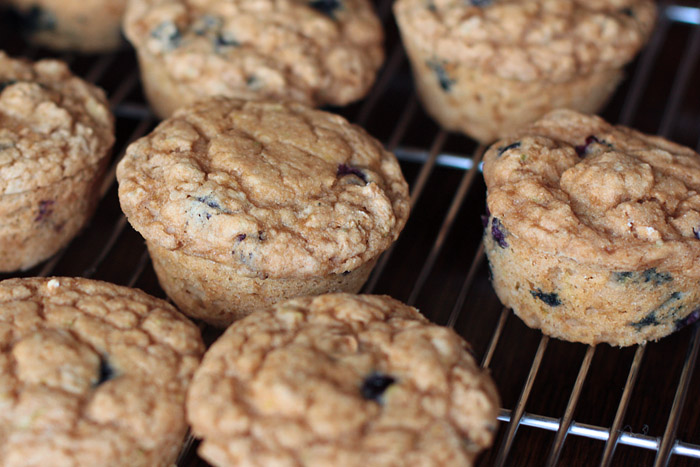
Whenever our little granddaughter comes to our house she always asks if she can have a muffin. I gave her a muffin once when she was barely a toddler, and she never forgot it. Miss E has a fantastic memory, and a raging sweet tooth, and practically reaches cosmic consciousness when she sees a piece of cake or a cookie. I never thought I'd be the sort of Grandie who indulges sweet cravings with things other than fruit and such. I was very into natural sweets with my own children, and not much into baked sweets myself. But I swear, I am compelled to give Miss E treats. I try to respect her Mom's wishes, and I DO keep it reasonably healthy, but this is a side of me that I find surprising.

And it's not just sweets. Today I actually bought Miss E a bright yellow Dora the Explorer shirt that I found on a resale rack for $1. This deserves a capital OMG. Miss E, who knows Dora from a talking book she received from her other Grammy when she was nine months old, was ecstatic; she's sleeping in the shirt as I write this. Her Papa, when we dropped the shirt off, said, "Oh no," but too bad.

Back to the muffins. As a baked treat, muffins can have less fat and sugar than cake or cookies, but be just as much fun to eat. I always make them with whole wheat flour and other wholesome ingredients so they will be as healthy as possible while still providing a pleasurable eating experience. I know I could just give her fruit or veggies for treats, but she gets plenty of those good foods, and she loves muffins so much, it's fun to sometimes provide these baked goodies.

Now that she's 2-1/2, Miss E can help me make them, and she loves that. The muffins pictured here were supposed to be blueberry-lemon, but when I went to get a lemon from the refrigerator, there was only one lime. The little cook was waiting so I grabbed the lime and made do. The lime was so juicy, there was a quarter cup of juice in just half the fruit, so I used the zest from the entire lime and the juice from half.

My little helper thought the muffins were delicious, and so did I. But next weekend I think we'll make fruit salad, just to change things up.

Blueberry-lime (or lemon) muffins
Preheat the oven to 350˚ F and oil 12 or 18 muffin cups. The recipe is enough for 18 muffins, but you can squeeze it all into 12 muffin cups and have muffin tops if you want. I actually prefer the smaller ones, but I only have a 12-cup muffin tin. I've been meaning to purchase a 6-cup pan so I can have lots of leftovers to freeze.
  • 1-3/4 cups white whole wheat flour
  • 1/4 cup coconut flour*
  • 1 teaspoon baking powder
  • 1 teaspoon baking soda
  • 1/3 cup evaporated cane juice (like Sucanot)
  • 1/4 teaspoon salt
  • 1 cup blueberries (I used frozen)
  • zest from 1 lime (or lemon)
  • 1-3/4 cups non-dairy milk
  • 1/2 cup lime (or lemon) juice
  • 3 tablespoons oil
  • 1 teaspoon vanilla
  • 1/2 cup plain, unsweetened, non-dairy yogurt
* You can use all white whole wheat flour instead of coconut flour. If all wheat flour is used, use only 1-1/2 cups of milk. The coconut flour gives the muffins a wonderful, soft, silky texture and more fiber, but isn't necessary.
  1. Stir the flour well to lighten it. Spoon it into the measuring cup and use the flat edge of a knife to level the top.
  2. Combine the flours, baking powder, baking soda, sugar, and salt in a large bowl and whisk or stir well to thoroughly combine.
  3. Stir in the zest and the blueberries.
  4. Combine the milk, lime juice, oil, vanilla and yogurt in a medium bowl and stir until smooth.
  5. Add the wet ingredients to the dry and combine, mixing as little as possible to incorporate all of the flour.
  6. Divide the batter (will be thick but light) between 12 muffin cups if you want muffin tops, or 18 muffin cups,for smaller muffins that don't fall over the pan.
.....................................................................................

Kasha and bowties


I love buckwheat so much I could eat it all the time. Traditionally, it's a winter food, and has warming qualities. I made kasha and bowties, or kasha varniskes, last night, and was intending to include a recipe, but now I'm too tired to write it. I'll get around to my version of k&b, which uses dried shiitake mushrooms and miso, soon, but in the meantime, if you want a great soup with buckwheat and bowties, try this one.

September 14, 2010

Loving Hut | Tilth Harvest Festival | Urban flocks

Last night marked our second visit to The Loving Hut vegan restaurant in Seattle's International District. I can't talk about the food without first giving a little background about the restaurant, and the woman behind it. But ... it's complicated. The Loving Hut is part of an international chain of vegan restaurants operated by independent owners under the auspices of Supreme Master Ching Hai. Is that a cult, you ask? Well, maybe. In searching out information about Supreme Master Ching Hai, I found lots of conflicting facts concerning what may or may not be unusual business practices and behaviors. To keep this at a reasonable length, and not be negative towards the Supreme Master, I'll stick mainly to the positive message approved by Supreme Master on her various Web sites.

She was born in Vietnam in 1960 to Catholic parents, but was exposed to Buddhist teachings through her grandmother. Her father was a distinguished naturopath. She was married briefly to a German scientist (when she worked in Germany) but left the marriage to pursue enlightenment with spiritual masters in the Himalayas. She sought out, and eventually found, a teacher of the Quan Yin method of Buddhist meditation — the meditation on inner light and inner sound. Supreme Master Ching Hai now accepts students of meditation, and offers her teachings free to all who agree to follow certain rules of behavior, such as being vegan, and giving up alcohol, drugs, tobacco and other vices.

The restaurant was pretty empty when we arrived, but several dining parties
Her enterprise is massive, and she has millions of followers. But, I'm mainly concerned here with the restaurant and its message. The restaurant's slogan is "Be vegan. Go green. Save the planet." Can't complain about that. The restaurant strives to serve delicious, healthy, organic, reasonably-priced vegan food. So far so good, right? And they have a parking lot — no small concession in hard-and-expensive-to-park-in Seattle. There's a literature table when you first walk in, and it has things like a vegan restaurant guide, and other information on embracing a vegan lifestyle. There was a "Meet Your Meat" DVD from Action for Animals, and a "Food Choices & Climate Change" DVD. The latter was obviously produced by the Supreme Master TV group, and it had photographs of Prince Charles, Hillary Clinton, Al Gore and, that's right, the Supreme Master. I haven't had a chance to view it yet.

There is a large-screen TV in the restaurant that plays the Supreme Master TV channel nonstop, but the sound isn't loud enough to encourage listening, and from where I was sitting, I was unable to see or hear well enough to understand what was showing. But no need to visit the restaurant if you want to watch, you can do it here: suprememastertv.com. It's available in many languages.

When we entered the nearly empty restaurant, we were greeted with disconcerting enthusiasm. I like to feel welcome at a business establishment, but occasionally a line can be crossed (I'm thinking of some experiences in Trader Joe's checkout line, to be specific) between welcome and weird. The young man who welcomed us, and became our waiter, was incredibly cheerful and helpful. Once I adjusted to his level of joy, I was OK, but something a little more subtle might have been nice. Do I sound like Scrooge? (He was attentive and charming, and I'm sure any discomfort was entirely my fault.)

So, by now you're wondering, how was the food? It was great. In spite of the overload of fake meat on the menu, I enjoyed the dishes we selected on both visits, but last night was my favorite. I wish we'd had more people with us so we could have tried more dishes. And I wish we could go back tonight! For starters we ordered basil rolls. These looked like perfectly made, fresh Thai spring rolls, but wrapped inside with the basil, vegetables, tofu, clear noodles and unidentifiable fake-meat-whatever, was a crunchy layer that might have been fried noodles. Whatever it was, it was amazing, and I want more.

Next we had Chinese Broccoli Noodle, which was filled with veggies, and was delicious. The vegetables tasted fresh, and the sauce was light — not heavy or greasy. I personally think it would have been better without the "beef," but we loved the large amount of Chinese broccoli and the ginger-flavored sauce.

Our second entrée was Curry Masala, with tofu, onion, and according to the menu, "all vegetables." This also was filled with fresh veggies, and topped with a delicately seasoned curry sauce. The dinner came with complimentary tea and brown rice. Although I really liked our food choices, I couldn't help but notice the huge bowl of fabulous looking soup at a nearby table. As we were leaving, I had to comment how good it looked, and ask what it was. It was called Bun Hue, and is a traditional, spicy soup that I'm ordering next time. Yes, we're definitely going back!

...................................................................................

Tilth Harvest Festival

This past weekend we attended the Tilth Harvest Festival, a celebration of local, organic food and farmers. There were rows and rows of informational booths as well as vendors selling everything from vegetables to chocolates to chicken coops. And speaking of chicken coops ...

If you are vegan, what do you think of the whole backyard chicken movement? I spoke to a few members of a vegan group at the fair, and they showed me the information sheet they were handing out. The paper was a realistic discussion of the care and responsibilities involved in humanely caring for urban hens. It emphasized the commitment required to nurture and protect from predators, urban chickens that might live 10 years or more. What happens when the chickens stop laying eggs? What happens when they get sick and require costly veterinary care? Hens are often treated as disposable creatures — certainly as edible ones. I also learned about the possibly questionable sources for urban chickens. Factory farms that hatch chicks routinely either grind up defective and slow-hatching females and newborn male chicks alive, electrocute them, or throw them into trash cans, where they slowly suffocate. Buying chickens from these places supports the cruelty.

On the one hand, if individuals using the highest standards raised their own chickens for eggs, and never depended on commercial eggs, perhaps we could see a small reduction in the suffering of hens raised for egg production. Part of me is very attracted to the idea — I like chickens and find them interesting. On the other hand, I'm vegan, and would rather see the urban, organic, local food movement embrace a more animal-friendly diet. I admit to being a little put off by people in rapture over local cheeses, meat, and eggs.

While at the festival, we attended a fermentation workshop where the owners of Firefly Kitchens talked about and demonstrated their approach to fermenting foods. I sampled their carrot ginger slaw and it was really good. They put the shredded vegetables and salt in jars and pound them to release their liquids, then ferment them from three days to four weeks to obtain the desired results. I felt they were too casual with their directions, telling people to taste a salt solution to see if it was salty enough to prevent bacterial growth, and they didn't make a strong enough case for proper cleaning of jars and equipment. For people new to fermenting foods, there wasn't enough detail. I've done quite a bit of food preserving in the past (before I got so lazy :D), including pickling in jars and crocks, and was surprised at the lack of clear information.

The workshop made me wish I had my Japanese pickle press here in Seattle so I could make quick pickles. The pickle press uses salt and pressure to make vegetables release their liquid, creating fast pickles and fermented foods. I may just pay a visit to Amazon and see how much the presses cost these days. Or maybe it's time to visit City Kitchens, and take advantage of their birthday sale.

Before we left the festival, we stopped at Devra Gartenstein's quesadilla stand where we found her selling three heat-and-eat black bean tamales for $5. We bought three, took them home, and had tamales with leftover ranchero sauce, kale and salad for supper.